


.webp?x-oss-process=image/resize,w_800/quality,q_100)
.webp?x-oss-process=image/resize,w_800/quality,q_100)
Biochar Carbon Credits: How to Generate Revenue and Choose the Right Equipment
May 27, 2026
Biochar Carbon Credits: How to Generate Revenue and Choose the Right Equipment
In 2026, biochar carbon credits trade between $160 and $170 per tonne CO₂e. Tech giants like Microsoft and Stripe pay a premium for high-quality carbon removal. The market is tight: 93% of industrial biochar supply was already locked in by contracts (Supercritical, 2025). Total contracted volumes reached 3.04 million tonnes by mid-2025 – with 1.6 million tonnes signed in just the first half of the year (CDR.fyi). Spot prices sit at about $150/tonne (Counteract VC & S&P Global).
This guide helps biomass operators choose the right pyrolysis equipment. The goal? Meet leading carbon standards (Verra, Puro.earth, Isometric), turn waste into certified carbon assets, and maximize your ROI. We also explain why equipment pre-approval – like Pyrogreen's Isometric certification – gives you a faster, lower-risk path to market. This guide explores the relationship between biochar and carbon credits for biomass operators.
The Economics: Can You Really Make Money Selling Biochar?
Understanding carbon credits for biochar starts with comparing biochar carbon removal to avoidance credits.
Why Biochar Credits Cost More Than Avoidance Credits
Biochar carbon removal (BCR) differs from avoidance credits. Here are five reasons BCR commands a higher price and is more attractive to buyers.
|
1. Active removal vs. passive avoidance – BCR pulls CO₂ out of the air. Avoidance only stops new emissions. Net zero requires removal.
|
|
2. Permanent storage – Biochar stays in soil for 100+ years. Avoidance projects can leak or reverse, which lowers their value.
|
|
3. Extra benefits – Biochar improves soil, water, and fertilizer efficiency. These co-benefits support ESG goals. Avoidance offers few extras.
|
|
4. High demand from big buyers – Microsoft, Stripe, and others only buy durable, high-quality credits. BCR is their top choice.
|
|
5. Tight supply – Quality biochar is hard to produce. Most supply is already sold. Scarcity pushes prices up.
|
ROI Simplified: A Simple Model
Take a small plant processing 10,000 tonnes of straw per year. Revenue comes from three sources:
| Biochar sales: 3,000 tonnes/year x $280/tonne ≈ $840,000 |
| Byproducts (wood vinegar, heat): ≈ $42,000 |
| Carbon credits: Each tonne of biochar stores ~3 tonnes of CO₂e. 3,000 tonnes biochar = 9,000 credits. At $150-$200 per credit → $1.35M - $1.8M |
Total annual revenue: $2.23M - $2.68M
Carbon credits alone ($1.35M+) already exceed biochar sales ($840k). That is the real profit driver.
Price per Tonne Reference (2026)
| Product / Credit Type | Price (USD) |
| Bulk biochar (low-grade) | $150-$250 / tonne |
| Industrial biochar (high-grade) | $400-$1,500+ / tonne |
| Biochar carbon credit (per tonne CO₂e) | $150-$200 |
| Avoidance credit (typical) | $3-$15 (falling) |
Bottom line: Selling biochar alone can work. But adding carbon credits makes the numbers far better. The market pays for permanent removal and co-benefits. Choose equipment that meets Verra, Puro.earth, or Isometric standards – then start earning.
The Requirements: What Makes Biochar "Credit-Worthy"?
Why Homemade Biochar or a Simple Kiln Cannot Generate Carbon Credits
Biochar carbon credits are not just about making charcoal. Each registry has its own biochar carbon credit methodology — Verra’s VM0044, Puro.earth’s Biochar Methodology v2025, and Isometric’s v1.0. They require a rigorous chain of evidence. The International Biochar Initiative states: "The value of a carbon credit depends entirely on the evidence and control system behind it." Homemade biochar or basic kilns fail to meet six critical requirements.
|
1. Carbon storage duration is too short
|
|
2. Feedstock cannot be traced
|
|
3. Production is uncontrolled and lacks data
|
|
4. Full life-cycle carbon balance cannot be calculated
|
|
5. Biochar quality is not verified
|
|
6. Final use cannot be verified
|
Comparison of Four Major Certifiers: Data Requirements for Production
| Aspect | Verra | Puro.earth | Gold Standard (PARC) | Isometric |
| Methodology version | VM0044 (dynamic baseline; soil & non‑soil) | Biochar Methodology (2025, 142 pages) | PARC modular framework (public consultation April 2026) | Biochar Production & Storage v1.0 / Decentralized v1.1 |
| Production scale allowed | Medium to large industrial | Continuous, batch, or semi‑batch | Three tracks: small (Track 1), medium (Track 2), large (Track 3) | Fixed industrial + mobile pyrolyzers (decentralized module launched April 2026) |
| Key process data required | Fixed carbon (lab); thermal utilization ≥70% | Temp curve & residence time; feedstock moisture; tar storage ≤12 months | Batch analysis; continuous thermal signal (Track 2) or CEMS (Track 3) | SOPs for startup, steady state, shutdown; mandatory GPS + tamper-proof timestamps |
| Carbon durability threshold | Fixed carbon value | H/Cₒᵣ₉ < 0.70 | Pure CDR mandate; inertinite mean random reflectance <2.0% for 1,000 years | Conservative 500–1,000+ year durability; inertinite verified by third party |
| Emissions & energy recovery | Carbon balance during production | Volatile residence ≥2 sec; methane ≤15% of stored carbon; pyrolysis gas combusted for heat | Zero baseline + only net negative; digital MRV; smartphone data capture (Track 1) | Conservative discounting; direct measurement where possible; cradle-to-grave LCA |
| Traceability & retention | Removal credited after final application | Record‑keeping ≥2 crediting periods; full chain traceability | Complete project description + third‑party verification; batch records with site coordinates | Detailed construction & process files; equipment models; incorporation evidence; durability data |
The bottom line: Homemade biochar or a simple kiln cannot generate carbon credits because they cannot produce the complete chain of evidence that carbon markets demand – from long-term durability (≥100 years) and legal feedstock sourcing, to real-time process monitoring, accurate life-cycle accounting, and verifiable end-use storage. Carbon credit value is, at its core, the monetization of scientific rigor.
3. Equipment Matters: The Link Between Technology and Certification
The key to successfully generating carbon credits with biochar is choosing technology with built-in dMRV. Not all biochar equipment can generate biochar carbon credits. The difference comes down to control, traceability, and credibility.. The difference comes down to control, traceability, and credibility. That’s why choosing the right technology is your first – and most important – decision.
Why Pyrogreen?
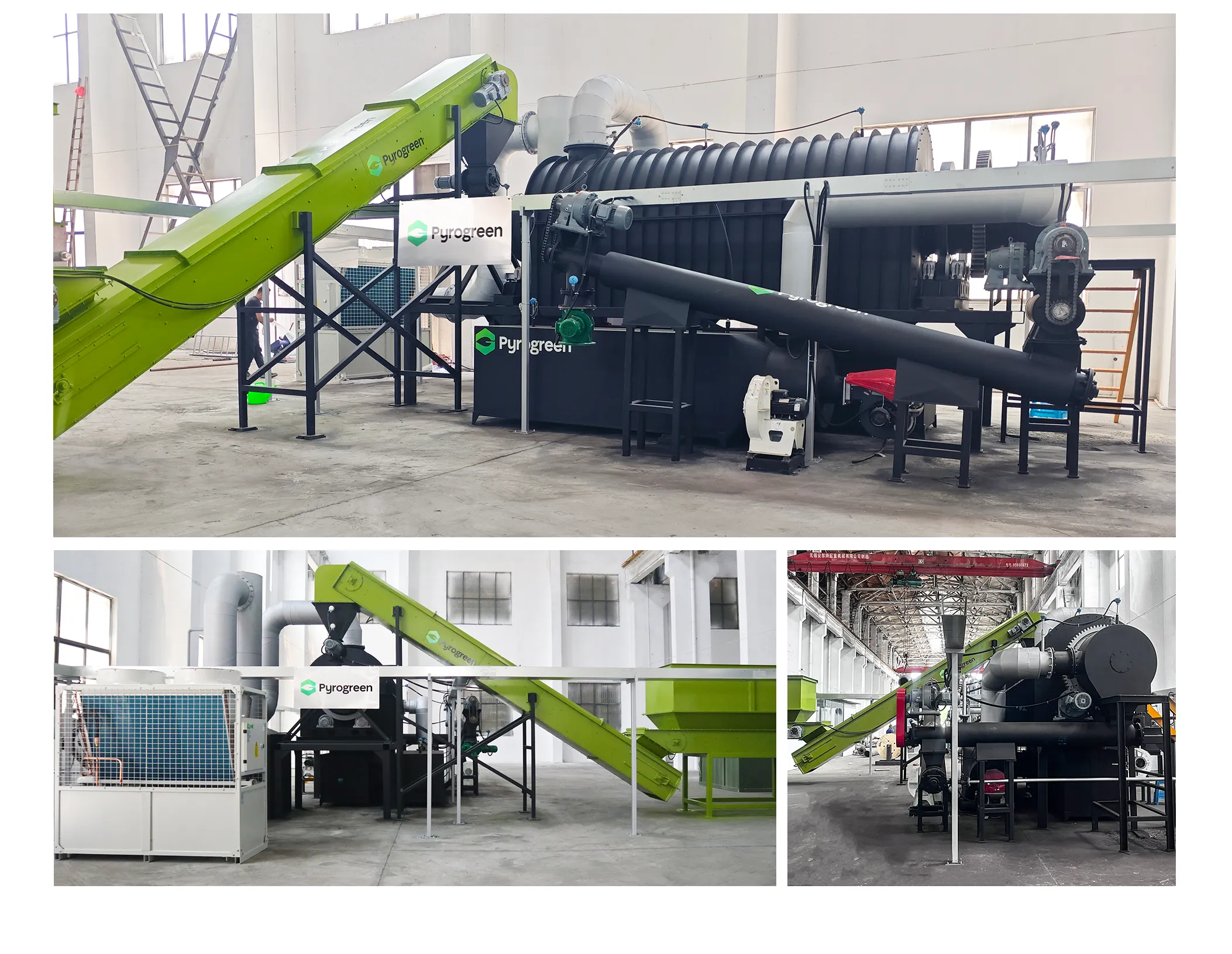
We don’t just sell pyrolyzers. We provide a certified pathway to biochar carbon credits and carbon revenue.
1. Pre-Approval – A Head Start on Trust
Pyrogreen’s BRKC 1000 is officially pre-approved by Isometric – one of the most rigorous carbon removal registries.This pre-approval accelerates your access to biochar carbon credits.
Risk already screened – Key technical parameters (carbon stability, process consistency, data integrity) are verified upfront.
Faster project launch – On-site validation is streamlined. You move from production to credit issuance much quicker.
2. Data Logging – No dMRV, No Credits
Every carbon credit requires digital Monitoring, Reporting, and Verification (dMRV). Without it, no registry will issue biochar carbon credits. Our BRKC 1000 comes ready:
PLC control system with ±5°C temperature precision
API‑ready data interface – seamless connection to Puro.earth and Isometric
Full traceability – feedstock records, pyrolysis temperature curve, residence time, energy use, biochar output
You get audit‑ready data streams automatically. No manual logging, no gaps, no rejection.
3. Scalability – One Platform, Many Sizes
Whether you aim for biochar carbon credits at small or large scale, Pyrogreen has a model for you:
| Model | Feed Rate | Typical Annual Biochar Output (7,000 hr) |
| BRKC600 | 200 kg/h | ~140 tonnes |
| BRKC1000 | 300 kg/h | ~210 tonnes |
| BRKC3500 | 1,000 kg/h | ~700 tonnes |
All share the same continuous rotary kiln design, same control system, same compliance backbone. Scaling up doesn’t mean re‑qualifying – you stay in the certified family.
4. Verified Technical Alignment with Global Standards
Our BRKC 1000 is built to meet certifier demands for biochar carbon credits – and exceed them:
| Parameter | Standard Requirement | Pyrogreen BRKC 1000 |
| Pyrolysis temp & residence time | >500°C, sufficient for H/Cₒᵣ₉ <0.70 | 500–650°C, 30–45 min |
| Gas combustion efficiency | ≥2 sec residence time at >1000°C | >1000°C, >2 sec – full tar/CH₄ combustion |
| Feedstock | Waste & residues only | Agricultural residues, husks, wood waste, manure |
| Data & MRV | Continuous logging, API integration | PLC + API ready (dMRV compatible) |
| Durability | Fixed carbon or inertinite analysis | Meets Isometric’s 500+ year pathway |
5. A Clear Revenue Model from Carbon Credits
Conservative numbers for biochar carbon credits from the BRKC 1000:
That’s pure additional cash flow on top of your biochar sales and byproduct revenue.
The bottom line: You can’t shortcut certification. But you can choose equipment that makes certification inevitable. Pyrogreen’s pre‑approved BRKC 1000 gives you built‑in dMRV, proven scalability, and a direct line to premium carbon markets. It’s not just a machine – it’s your entry ticket to the biochar carbon economy.
Quick Q&A
What are biochar carbon credits?
One credit represents one metric tonne of CO₂e permanently removed from the atmosphere and stored in biochar, verified by a registry like Puro.earth, Verra, or Isometric.
How much are biochar carbon credits worth?
Around $150-$170 per tonne CO₂e in 2026 spot markets. Prices are expected to rise further.
Who buys biochar carbon credits?
Large tech companies (Microsoft, Stripe, Google), corporate climate leaders, and carbon removal buyers like Frontier.
Is biochar just burnt wood?
No. Biochar is made through high‑temperature pyrolysis with limited oxygen, creating a stable, long‑lasting carbon structure. Simple burnt wood (ash or charcoal) lacks durability and won't generate biochar carbon credits.
Why is biochar controversial? / What are the dangers?
Main risks: feedstock contamination (heavy metals), incomplete pyrolysis that releases methane, competition for biomass land use, and overstating carbon benefits without proper monitoring.
Can you make money selling biochar?
Yes – by stacking revenue from biochar sales, byproducts (wood vinegar, heat), and biochar carbon credits. Credits often earn more than the physical biochar itself.
5. Strategic Implementation: Your Path to Market
Turning biomass into biochar carbon credits requires a clear, step‑by‑step process. Here’s how you go from feedstock to revenue.
Step 1 – Feedstock Audit
Not all biomass works. You need consistent, verifiable waste or residues (straw, husks, wood waste, manure). We help you assess volume, moisture content, and supply chain traceability – the foundation of any carbon credit project.
Step 2 – Equipment Selection & Compliance
Choose technology that meets registry standards from day one. Pyrogreen’s pre‑approved BRKC series (e.g., BRKC 1000) comes with documented compliance, dMRV‑ready data logging, and alignment with Isometric, Puro.earth, and Verra methodologies.
Step 3 – Choosing a Registry
Your path to biochar carbon credits depends on your target buyers:
Isometric – fastest pre‑approval path, strong for 500+ year durability credits
Puro.earth – established biochar standard, widely accepted in Europe
Verra (VM0044) – larger scale, global recognition
We help you match your project to the right registry for both speed and premium pricing.
Step 4 – Project Registration & Third‑Party Verification
Once your system runs, you submit production data through a dMRV platform. A third‑party verifier audits your feedstock, process, and biochar quality. With pre‑approved equipment, this step is significantly faster.
Step 5 – Issuance & Sale
After verification, biochar carbon credits are issued to your account. You can then sell them directly to corporate buyers (e.g., Microsoft, Frontier) or through carbon market brokers.
Professional Support – How We Help You Succeed
We don’t just deliver a machine. We help you from first credit issuance to scaling your biochar carbon credits.
Engineering support – Site layout, installation, commissioning, and operator training
Compliance consulting – Guidance on feedstock documentation, data logging setup, and registry selection
dMRV integration – Our equipment comes API‑ready, connecting seamlessly to major monitoring platforms
Ongoing advisory – From first credit issuance to scaling your project
Your success is our success. We stay with you through the entire journey.
Conclusion: Start Your Carbon‑Negative Project
Biochar carbon credits have entered a mature, revenue‑generating phase. For biomass operators, this is not just an environmental choice – it’s a future business advantage. By pairing the right feedstock with the right equipment, you turn waste into a high‑value carbon asset.
The market is ready. The standards are clear. And the technology is proven.
Call to Action
Not sure if your biomass feedstock qualifies?
Contact our team for a free technical consultation and equipment compliance assessment.
CONTACT US
Contact US
Product Information
Quantity
Unit
Piece
Support order samples, customization, wholesale direct, and complete payment. If the product you look for does not have corresponding customized content, pls fill out the form below to contact us, and we will reply ASAP.