


.webp?x-oss-process=image/resize,w_800/quality,q_100)
.webp?x-oss-process=image/resize,w_800/quality,q_100)
Is Your Waste Biomass Costing You $1.2M per Year in Lost Carbon Credits?
Oct 31, 2025
Is Your Waste Biomass Costing You $1.2M per Year in Lost Carbon Credits?
Introduction:
Industrial manufacturers and large-scale agricultural operators face a dual challenge: managing biomass waste streams and meeting aggressive ESG targets. The 2022 IEA report confirms CO2 emissions have reached record highs, intensifying regulatory and investor pressure. Biochar production represents a tangible pathway to transform liability into asset, generating verified carbon removal credits (BCR) and new revenue streams.
The Untapped Value in Biomass Waste
Most organizations treat agricultural residues, forestry by-products, and processing waste as disposal problems. Current practices like open burning or landfilling release carbon immediately while creating regulatory compliance burdens. According to the "Biomass to Biochar" report, sustainable biomass conversion could offset up to 19% of regional emissions while creating economic development opportunities in rural communities.
The financial impact is clear: Every ton of biomass converted to biochar represents approximately 2-3 tons of CO2e in potential carbon credits, plus marketable biochar products and recoverable thermal energy.
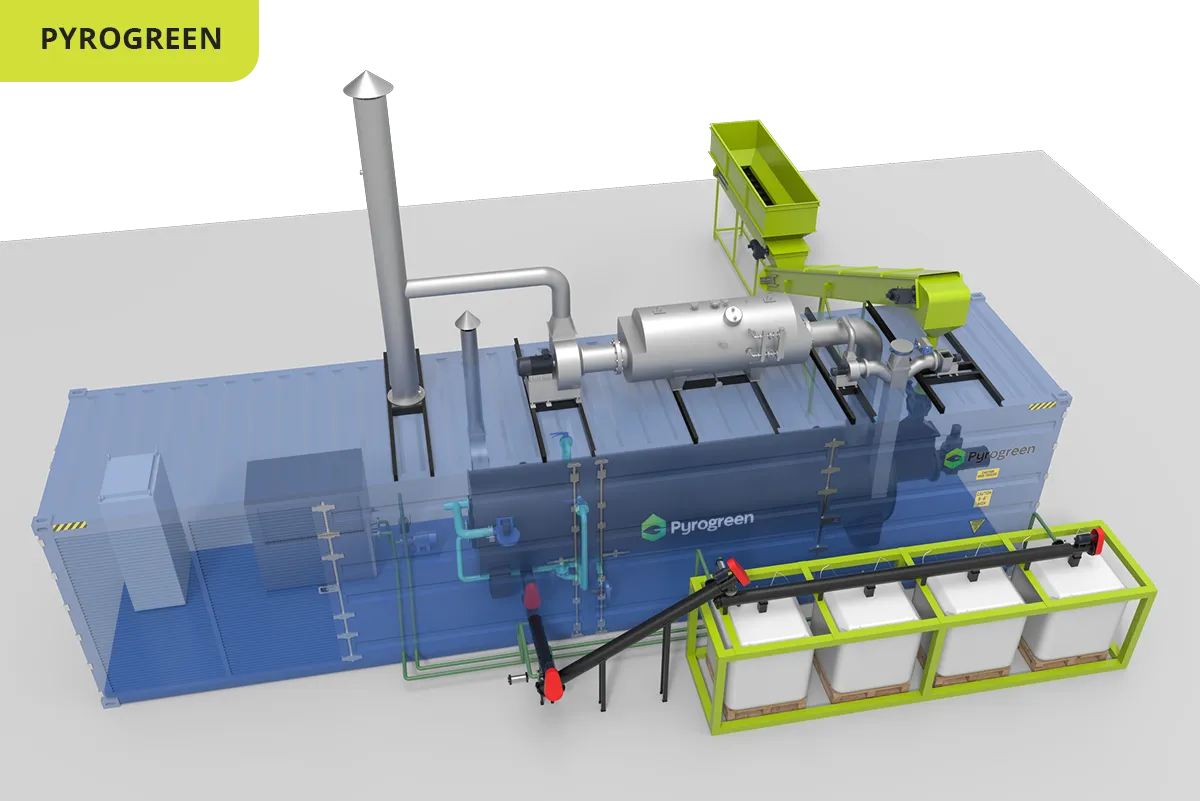
Three Engineering Solutions for Scalable Carbon Removal
1. Advanced Reactor Technology Maximizes Carbon Conversion
Point: Carbon conversion efficiency directly determines both carbon credit yields and project ROI.
Evidence: The "Biomass to Biochar" report shows systems with 30-55% carbon conversion efficiency generate 22+ tonnes CO2e offsets per tonne of biomass carbon, compared to just 2.3 tonnes at 5% efficiency.
Application: Pyrogreen's continuous carbonization systems including screw pyrolysis reactors and rotary kiln biochar production achieve consistent high-efficiency conversion, maximizing credit generation while minimizing feedstock requirements.
Key technology advantages:
-
Modular concept enables rapid deployment across multiple sites
-
Fully automated operation reduces labor costs
-
Zero tar production eliminates waste disposal issues
-
Extremely low NOx, CO and particulate emissions simplify permitting
2. Integrated Energy Recovery Creates Multiple Revenue Streams
Point: Capturing process energy significantly improves project economics, particularly for energy-intensive operations.
Evidence: The "Biomass to Biochar" analysis indicates that utilizing syngas for thermal applications can increase net carbon value by at least 60%.
Application: Pyrogreen's biomass carbonization equipment integrates syngas recovery for direct use in drying operations, steam generation, or industrial heating, displacing fossil fuel consumption and creating additional savings.
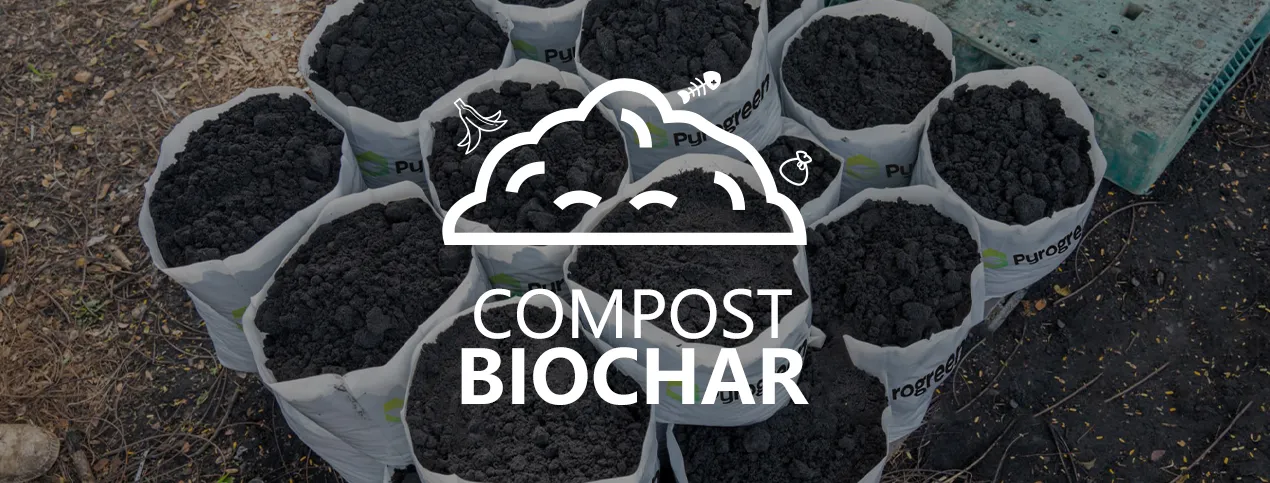
Energy recovery applications:
-
Thermal energy for manufacturing processes
-
Drying systems for agricultural products
-
Steam generation for industrial use
-
District heating systems
3. Climate Financing Eliminates Capital Barriers
Point: Traditional CAPEX requirements have prevented widespread adoption of industrial-scale biochar production.
Evidence: Pyrogreen's Climate Financing Solution covers up to 80% of equipment costs through forward carbon credit purchases, fundamentally changing the investment equation.
Application: Qualified organizations can deploy large-scale biochar production equipment with minimal capital outlay, accelerating ROI and derisking the transition to carbon-negative operations.
Financing structure:
-
Buyer commits to BCR credit purchase at agreed price
-
Proceeds cover majority of Pyrogreen equipment costs
-
Insurance coverage through A+ S&P-rated provider
-
Credit generation begins immediately at commissioning
From Carbon Emitter to Carbon Negativity
Industrial leaders no longer need to choose between profitability and sustainability. The technology exists to transform biomass liabilities into carbon assets while creating new revenue streams. The "Biomass to Biochar" report confirms that strategic biochar implementation can simultaneously address climate commitments, reduce wildfire risk, improve soil health, and revitalize rural economies.
The math is compelling: A single Pyrogreen continuous pyrolysis reactor processing 10,000 tons of biomass annually can generate approximately 6,000 carbon credits while producing 3,000 tons of marketable biochar and recovering significant thermal energy.
Schedule Your Carbon Removal Feasibility Assessment
Stop leaving carbon credits and revenue opportunities in your waste streams. Pyrogreen's technical experts will conduct a comprehensive analysis of your biomass resources and operational requirements to design a customized carbon removal solution with definitive ROI projections.
Contact our climate solutions team today to:
-
Calculate your specific carbon credit potential
-
Model energy recovery savings
-
Structure climate financing options
-
Develop implementation timeline
The future of industrial sustainability is carbon negative. Position your organization as a leader in the circular bioeconomy.
CONTACT US
Contact US
Product Information
Quantity
Unit
Piece
Support order samples, customization, wholesale direct, and complete payment. If the product you look for does not have corresponding customized content, pls fill out the form below to contact us, and we will reply ASAP.