


.webp?x-oss-process=image/resize,w_800/quality,q_100)
.webp?x-oss-process=image/resize,w_800/quality,q_100)

Exploring the Diversified
Application Value of Renewable Gas
The value of biomass renewable gas lies in its flexibility: it can be used directly as an energy source or as a platform chemical leading to a wide range of products.
1.Energy and Power Applications

01.Power generation and
combined heat and power
(CHP)
Purified renewable gas has a moderate heating value and can be directly used as fuel in gas engines, gas turbines, or microturbines for electricity generation, typically achieving higher efficiency than conventional direct biomass combustion. If the waste heat from power generation is recovered for heating or industrial steam, CHP can be realized. This distributed energy model is particularly suitable for utilizing agricultural and forestry residues and providing energy to remote areas or industrial parks.
.webp?x-oss-process=image/resize,w_140/quality,q_100)
02.Substitute for natural gas
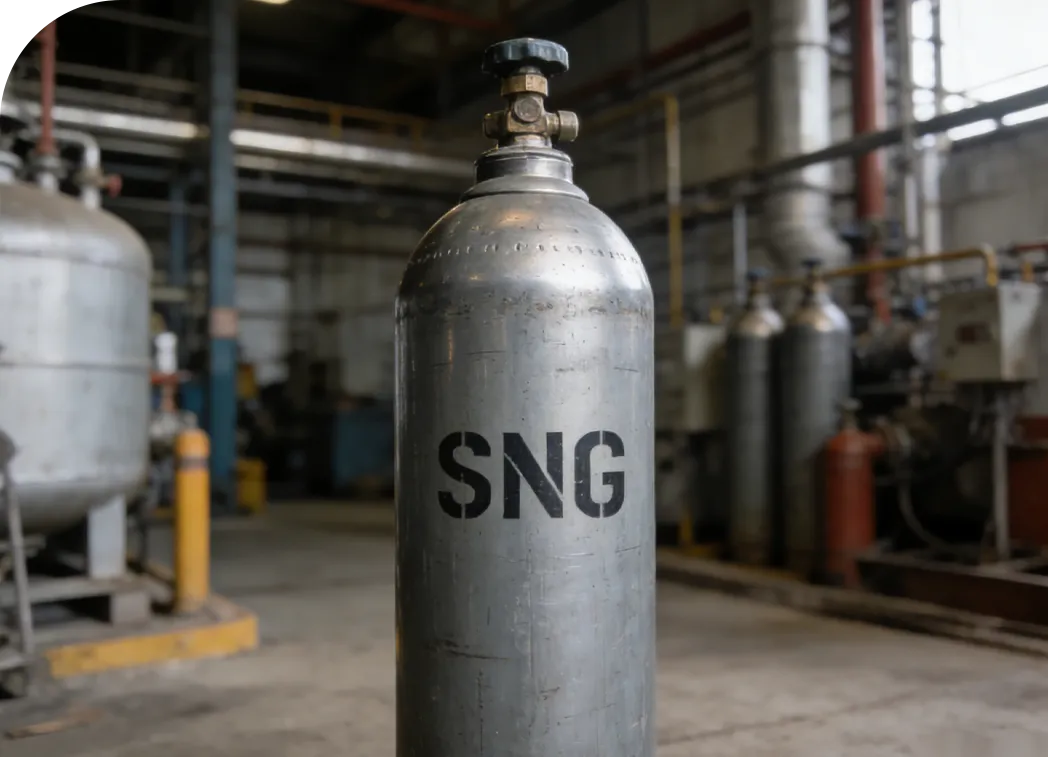
Through methanation (CO+ 3H2→CH4+ H2O), renewable gas can be converted into methane-rich substitute natural gas (SNG). SNG has similar properties to natural gas and can be seamlessly injected into existing natural gas pipelines or used as compressed natural gas (CNG) or liquefied natural gas (LNG) for vehicles.
03.Hydrogen production
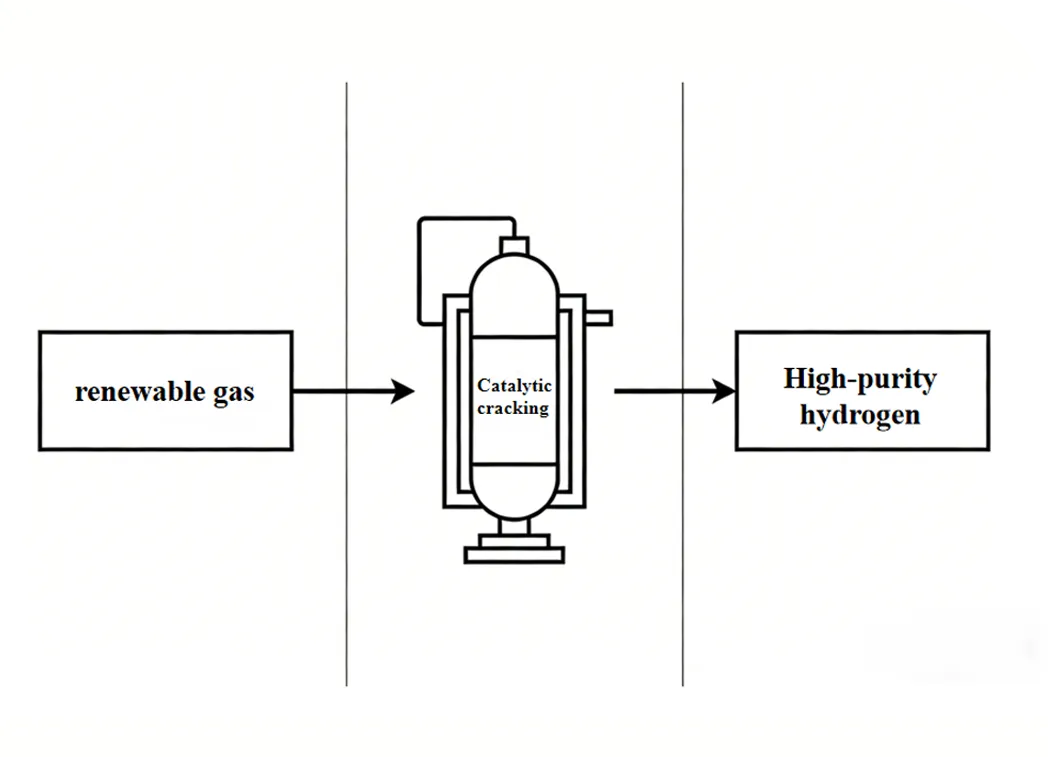
Hydrogen is a key component of future clean energy systems. Using the process route of “renewable gas purification + water–gas shift + hydrogen separation (e.g., PSA),” high-purity hydrogen can be produced from biomass renewable gas. This “green hydrogen” can be used in fuel cell vehicles, industrial feedstock (e.g., refining, ammonia synthesis), and other applications.
2.Chemical Feedstocks and Liquid Fuel Synthesis
This represents the highest-value utilization of biomass renewable gas and is central to the concept of “biorefinery.”
01.Fischer–Tropsch
synthesis (FTS)
A mature technology from coal and natural gas chemistry, FTS converts renewable gas (CO + H2) into linear hydrocarbon mixtures via catalytic reactions. By controlling reaction conditions and catalysts, high-quality liquid fuels such as gasoline, diesel, and jet fuel can be selectively produced, along with high-value chemicals like waxes and lubricants. Using biomass renewable gas for FTS is a key route for producing second-generation biofuels, especially sustainable aviation fuel (SAF).
.webp?x-oss-process=image/resize,w_1213/quality,q_100)

02.Methanol synthesis
Using copper-based catalysts, renewable gas can be efficiently converted into methanol (CO + 2H2 → CH3OH). Methanol is an important basic chemical feedstock (used for producing formaldehyde, acetic acid, olefins, etc.), a clean liquid fuel (methanol gasoline, marine fuel), and a potential hydrogen carrier. The “biomass → renewable gas → methanol” route is considered one of the most promising pathways for large-scale chemical utilization of biomass.
CONTACT US
Contact US
Product Information
Quantity
Unit
Piece
Support order samples, customization, wholesale direct, and complete payment. If the product you look for does not have corresponding customized content, pls fill out the form below to contact us, and we will reply ASAP.